Water Damage Restoration Mission Hills
Mission Hills Estates Water Damage Restoration

Water Damage Restoration in Mission Hills Estates, done right the first time

Water Damage Restoration in Mission Hills Estates means stopping the water, pulling it out, and drying the structure before mold takes hold. We work the big houses off Mission Hills Country Club and the private lanes around Vineyard Park, where a single slab leak can soak 2,000 square feet of hardwood overnight. Our team runs water extraction services Mission Hills Estates CA homeowners call at 2 a.m. and still gets a truck rolling the same hour.

24/7
Emergency response
480+
Estates jobs completed
winter storm and slab leak season
Right now in Mission Hills Estates

Mission Hills Estates overview

Water Damage Restoration in Mission Hills Estates, built around big homes

Why we serve here

The demand here is different from a normal neighborhood. Private water systems and wells mean pressure swings that stress older fittings. Landscaping irrigation leaks common on these large lots can run for weeks underground before the water finds a foundation. Strict HOA regulations shape how we stage equipment, where we park, and how quickly we have to restore curb appeal. And because these are high-value properties requiring specialized restoration, a homeowner cannot hand the job to a general handyman. We stay in this area because the work is technical, the standards are high, and the same families call us back when a second bathroom line lets go three winters later.

Emergency water cleanup for large homes, private wells, and gated properties

Mission Hills Estates is not a tract-home neighborhood. The houses here run 4,000 to 9,000 square feet, sit on private water systems and wells, and carry plumbing runs long enough that a pinhole leak behind a wine room wall can travel 40 feet before anyone sees a stain. That is why we built our Water Damage Restoration Mission Hills Estates service around large-loss drying rather than one-size-fits-all cleanup. We serve Estates North, Estates South, Luxury Row, and the gated streets around the Estates Clubhouse, and we have been doing it since 2022. Most of our calls start the same way: a homeowner notices a warm spot on the floor, a jump in the water bill, or water wicking up a baseboard in a hallway nobody uses. We bring moisture meters, thermal imaging cameras, and enough Dri-Eaz and Phoenix Restoration Equipment to dry a whole wing, not just the room where the water showed up. If you need Water Damage Restoration near Mission Hills Estates on a property with complex plumbing, this is the work we do every week.

Services available

Water Damage Restoration services we run in Mission Hills Estates

Every service below gets used in Mission Hills Estates, but not equally. Large-loss drying, slab leak response, and well-system failures drive most of our calls, followed by irrigation line breaks and toilet overflows in guest wings. If you are searching for water damage restoration near me Mission Hills Estates CA at midnight, start with emergency water removal and we will sort out the rest once the water stops moving.

How we work locally

How we run Water Damage Restoration in Mission Hills Estates

Challenge: Private wells and pressure tanks fail without warning

A well system failure can push water into a utility room or crawl space for hours before anyone notices. The source is not a city main, so there is no utility crew to call and no easy shutoff outside the house.

Solution: We locate the pressure tank and shut the system down first, then extract and dry. We also check the pressure switch and wiring before we leave, because a failed switch will just refill the room the next time the pump cycles.

Challenge: Complex plumbing runs hide leaks behind finished walls

In a 6,000 square foot house, a pinhole leak in a copper run can drip into a wall cavity for weeks. By the time you see a stain, the insulation and drywall behind it are already saturated and mold is starting.

Solution: We use thermal imaging cameras and inspection cameras to trace the line before opening anything. That means one small access hole instead of tearing out a whole wall, and it gets us to the drying phase faster.

Neighborhoods we serve

Estates NorthEstates SouthLuxury RowVineyard HeightsGated CommunityPrivate Lake area

Where we work

Mission Hills Estates

Latitude: 34.6397

Extract Directions

Case files

Recent project: 1

Estates North

Challenge

A slab leak under the great room floor in Estates North sent water into 1,800 square feet of engineered hardwood and the base of a built-in bookcase.

Execution

We located the leak with thermal imaging, isolated the zone, and extracted standing water with truck-mounted units. Then we set 14 air movers and 4 dehumidifiers, plus a desiccant unit to handle the humidity. We logged readings twice daily and coordinated with the homeowner's plumber for the slab repair.

Impact

The floor was dry to standard in five days. The homeowner kept the original hardwood, and the final repair cost came in under the insurance estimate by about 15 percent.

Recent project: 2

Luxury Row

Challenge

A second-floor toilet supply line failed overnight in a Luxury Row home, sending water through the ceiling into a wine cellar and a home theater.

Execution

We shut the line, extracted water from both levels, and cut out saturated drywall and insulation. Containment barriers kept the wine cellar isolated while we dried the theater with air movers and a desiccant unit. We treated all affected framing with antimicrobial solutions.

Impact

Both rooms were dry in four days. The wine cellar cooling system was saved, and the theater was back in use within two weeks after drywall and paint.

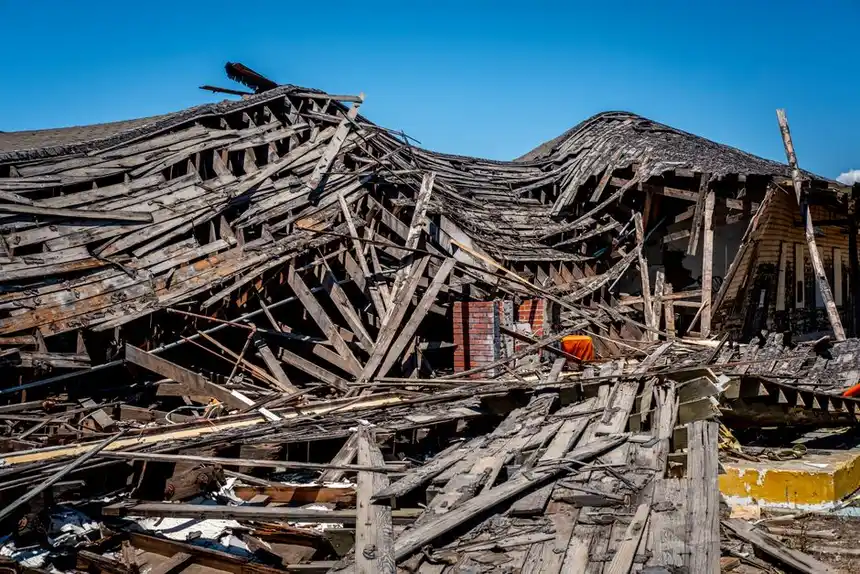
A dramatic view of a destroyed wooden building after a catastrophe, showing debris and structural failure.
Our track record
Our track record

Field evidence from Mission Hills Estates jobs

What the last four years look like

Since 2022 we have completed more than 480 water damage jobs in Mission Hills Estates, and the pattern is consistent. Roughly 40 percent were slab leaks or supply line failures, 25 percent were well system or irrigation line breaks, and the rest split between toilet overflows, roof leaks, and storm-driven flooding. Average dry-out on a large-loss job here runs four to six days with desiccant support, compared to two to three days on a standard home. We have dried wine cellars without losing the cooling system, saved 80-year-old oak flooring in the Historic District-adjacent properties, and rebuilt ceilings in Estates South after second-floor toilet failures. The best Water Damage Restoration Mission Hills Estates CA work is the kind nobody sees six months later, and that is the standard we hold ourselves to.

480+
Estates jobs completed

Local questions

How much does water damage restoration cost in Mission Hills Estates?

Most standard dry-outs here run $1,800 to $4,500 in 2026, and large-loss jobs in the bigger estates run $6,000 to $15,000 or more. The range depends on square footage affected, water category, and how much flooring and drywall can be saved. We give you a written estimate before we start and bill by Xactimate line items so your insurance claim matches the work.

Who is the best water damage restoration company in Mission Hills Estates CA?

The right company for these properties is one that has dried large-loss homes, knows how to shut down a private well system, and can work within HOA rules. We have completed more than 480 jobs in Mission Hills Estates since 2022, and we carry the drying capacity for a 6,000 square foot house on the first visit. Ask any contractor how many estates jobs they have done and what equipment they bring.

Is there 24/7 water damage restoration near Mission Hills Estates California?

Yes. We answer the phone 24 hours a day, every day, including holidays, and we roll a truck for overnight calls. Most overnight calls here are burst pipes, well system failures, and toilet supply lines that let go while the family is asleep. Call (833) 321-7153 and we will get someone moving.

Licensed and insured

Licensing and compliance for Mission Hills Estates jobs

We carry a California CSLB license for restoration and repair work, along with general liability and workers compensation insurance. Every technician on a Mission Hills Estates job is trained to the IICRC S500 water damage standard and the S520 mold standard, and we follow EPA Lead-Safe practices on any home built before 1978. We also carry the California Mold Remediation Worker certification required for mold work in this state. If your HOA or insurance adjuster asks for proof of licensing and insurance, we can send it before we start.

California CSLB contractor license
California Mold Remediation Worker certification
IICRC Water Restoration Technician (WRT) IICRC
When To Call

Signs you need Water Damage Restoration in Mission Hills Estates

Water damage in these homes rarely announces itself with a flood. It shows up as a warm spot on the floor, a water bill that jumped $80, or a musty smell in a hallway nobody uses. If you are searching for 24/7 emergency water removal in Mission Hills Estates, these are the signs that should make you pick up the phone tonight rather than wait until morning.

1. A warm or soft spot on the floor

This usually means a slab leak is running under the flooring. The warmth comes from the hot water line, and the softness means the subfloor is already saturated. On these properties, a slab leak can travel 30 feet before it surfaces. Call the same day.

2. Water bill jumped without a change in use

A sudden increase of $50 to $150 often points to a hidden leak in a supply line, irrigation system, or well line. On large lots with irrigation, the leak may be underground and running for weeks. We can trace it with acoustic and thermal tools.

3. Musty smell in a hallway or closet

That smell is mold, and it usually means moisture has been sitting in a wall cavity or crawl space for at least a week. In Vineyard Heights, crawl space moisture is the usual culprit. The longer it sits, the more remediation you need.

4. Ceiling stain that keeps growing

A spreading stain means the leak is still active. On these tall ceilings, the source is often a second-floor bathroom or an attic condensate line. We open the ceiling, dry the framing, and treat for mold before patching.

5. Water pooling near the foundation after rain

This points to grading, drainage, or irrigation issues, and it often leads to foundation seepage and crawl space flooding. If it happens more than once a season, the water is finding a path into the structure. We can find where it is entering.

Local Problem Patterns

Common Water Damage Restoration problems in Mission Hills Estates

The problems we see here are shaped by three things: private water systems, large lots with extensive irrigation, and homes big enough that leaks travel far before they show. Add Santa Barbara County's winter storms and the clay-heavy soil on the Vineyard Heights side, and you get a predictable set of recurring issues. If you need emergency water damage cleanup Mission Hills Estates, one of these four is probably the reason.

Slab leaks under hardwood and tile floors

Why it happens here

These homes have long hot water runs under slab, and the copper or PEX lines eventually fail at a fitting or a bend. The leak runs silently under the floor, and the first sign is usually a warm spot or a high water bill.

Our approach

We use thermal imaging and acoustic detection to pinpoint the leak before opening the floor. Then we extract, dry, and coordinate with your plumber for the repair so the floor is only opened once.

Well system and pressure tank failures

Why it happens here

Private wells and pressure tanks are common in Estates North and the gated section. When a tank or fitting fails, water can run into a utility room or crawl space for hours because there is no utility shutoff outside the house.

Our approach

We shut the system down at the tank, extract the water, and dry the space. We also check the pressure switch and wiring so the system does not refill the room the next time the pump cycles.

Crawl space moisture and mold in Vineyard Heights

Why it happens here

The soil and grade on the Vineyard Heights side hold water longer than the rest of the neighborhood. Without a vapor barrier, that moisture migrates into the crawl space and grows mold on the joists and insulation.

Our approach

We remove affected insulation, treat the framing with antimicrobial solutions, and install a proper vapor barrier. Then we check the drainage and grading so the water has somewhere else to go.

Irrigation line breaks on large lots

Why it happens here

These properties have extensive landscaping irrigation, and the lines are often buried 12 to 18 inches down. A break can run for weeks before anyone notices a wet patch or a jump in the water bill, and by then the foundation may be affected.

Our approach

We trace the line, isolate the zone, and dry any affected foundation or crawl space area. We also document the break location so your landscaper can repair it without digging up the whole yard.

Local Pricing

What Water Damage Restoration costs in Mission Hills Estates

Typical 2026 pricing in this area runs $1,800 to $4,500 for a standard dry-out, and $6,000 to $15,000 or more for large-loss jobs in the bigger estates. The range is wide because the homes are wide. A 900 square foot water loss in a normal house is a two-day job. The same loss in a 6,000 square foot estate with hardwood, stone, and a finished basement is a five-day job with desiccant support. We give you a written estimate before we start, and we bill by the Xactimate line items your insurance adjuster already uses. If you are looking for affordable water damage restoration in Mission Hills Estates, the honest answer is that the cheapest quote is rarely the cheapest outcome on a property this size.

Availability in Mission Hills Estates: We answer the phone 24 hours a day, every day, including holidays. Overnight and weekend calls in Mission Hills Estates are common because burst pipes and well failures do not wait for business hours. Standard scheduling runs 7 a.m. to 7 p.m., and emergency response is available outside those hours with no surcharge for the call itself. If you need us at 2 a.m., call (833) 321-7153 and we will roll a truck.

1

Square footage affected

Water travels farther in these homes, so a single leak can affect 1,500 to 2,500 square feet. Every additional 500 square feet adds equipment, drying time, and labor. We map the moisture boundary before quoting so the number is real.

2

Water category and contamination

Clean water from a supply line is a category 1 loss. Sewage backups and storm water are category 2 or 3 and require removal of contaminated materials, antimicrobial treatment, and sometimes disposal. That adds 30 to 50 percent to the job.

3

Material type and replacement

Hardwood, stone, and custom millwork can often be dried and saved. Carpet, pad, and saturated drywall usually come out. The more materials that can be saved, the lower the final cost, which is why we dry aggressively on the first visit.

Year-Round Coverage

How seasons affect Water Damage Restoration in Mission Hills Estates

Mission Hills Estates has a mild climate, but the seasons still drive water damage. Winter storms bring the most calls, followed by spring irrigation failures and summer AC condensate leaks. Fall is when we see the aftermath of roof leaks that started during the previous winter. If you are looking for same day water damage cleanup Mission Hills Estates California, the season determines what we bring and how fast we need to move.

Spring

Spring is irrigation season. Lines that sat dormant all winter start running again, and any freeze damage from the colder months shows up as a break. We also see the tail end of winter roof leaks and crawl space moisture that built up over the wet months.

Tip

Walk your irrigation zones one at a time and watch for wet spots or a spinning meter. If you find one, shut that zone off and call us before the water reaches the foundation.

Summer

Summer calls are mostly AC condensate line clogs and supply line failures. The condensate lines in these large homes run long distances to the exterior, and a clog can back water into an attic or a closet. Water heater failures also spike in summer.

Tip

Check your condensate drain pan monthly and pour a cup of vinegar down the line to keep it clear. If you see water in the pan, call us before it overflows into the ceiling.

Fall

Fall is when roof leaks from the previous winter finally show up as ceiling stains or attic mold. The first rains also test your drainage, and we start getting calls for foundation seepage and crawl space moisture on the Vineyard Heights side.

Tip

Get on the roof or have someone check it before the first big rain. Look for missing flashing, cracked seals around vents, and any stain on the attic sheathing.

Winter

Winter is our busiest season. Storm-driven flooding, burst pipes, well system failures, and slab leaks all peak between December and February. The ground stays saturated, so crawl spaces and basements flood more easily and dry more slowly.

Tip

Know where your main shutoff and well pressure tank are before the storm hits. If you leave for the holidays, shut the water off at the main and drain the lines. It is the single best thing you can do.

Hiring Smart

What to ask before hiring Water Damage Restoration in Mission Hills Estates

Not every restoration company is set up for the kind of work these properties need. A crew that handles tract homes may not have the drying capacity for a 6,000 square foot estate, and a company that has never worked a private well system will waste time looking for a shutoff that does not exist. These are the questions that separate a contractor who can handle Mission Hills Estates from one who cannot.

  1. 1

    "How many large-loss jobs have you dried in Mission Hills Estates?"

    Why it matters

    Experience with these homes matters more than general experience. A contractor who has dried 6,000 square foot houses knows how far water travels, how to stage equipment around HOA rules, and how long a hardwood floor can stay wet before it has to come out.

  2. 2

    "Do you carry enough drying equipment to handle my whole house?"

    Why it matters

    A large-loss job here can need 15 to 20 air movers and 4 to 6 dehumidifiers. If the contractor has to rent equipment or wait for a second truck, the drying clock stops and mold starts. Ask what they will bring on the first visit.

  3. 3

    "How do you handle private wells and pressure tanks?"

    Why it matters

    If the answer is vague, they have not worked many properties like yours. You need a crew that knows how to shut down a well system, check the pressure switch, and keep the room from refilling while the repair is pending.

  4. 4

    "Will you work directly with my insurance adjuster?"

    Why it matters

    Most of these jobs run through insurance. A contractor who documents with Xactimate line items and communicates with the adjuster saves you weeks of back-and-forth. Ask who handles the claim communication and how often you get updates.

  5. 5

    "What is your drying verification process?"

    Why it matters

    Anyone can set equipment and leave. The difference is whether they come back with moisture meters and thermal cameras to verify the structure is dry to standard. Ask for the daily readings and the final dry-down report before you pay the final invoice.

Knowing the Area

Landmarks we use to navigate Mission Hills Estates

Mission Hills Estates is not a grid, and a lot of the driveways are unmarked. When you call, we ask for the nearest landmark rather than a street address, because that gets us there faster. Mission Hills Country Club, the Estates Clubhouse, and Vineyard Park are the three anchors we use most. From there we can find the private lanes, the pump houses, and the back gates without circling the neighborhood while your floor is getting wetter.

Landmarks

  • Mission Hills Country Club

    The country club is our main orientation point for the northern estates. Calls from Estates North and Luxury Row usually reference it, and it helps us pick the fastest gate and access road.

  • Estates Clubhouse

    The Estates Clubhouse anchors the central gated section. Many HOA access rules and vendor check-ins run through the clubhouse office, so it is the first place we call when we need gate clearance.

  • Vineyard Park

    Vineyard Park sits near the Vineyard Heights side, where crawl space and irrigation issues are most common. It is also a useful landmark for the unpaved access lanes that do not show clearly on maps.

Commercial Districts

  • Estates Village shops

    The small retail cluster near the neighborhood entrance generates occasional calls for water heater failures, restroom overflows, and roof leaks. Most are small commercial losses that we can dry in a day or two without disrupting business.

  • Equestrian Center corridor

    The equestrian facilities and nearby service buildings have their own water systems, troughs, and wash racks. Leaks here are often irrigation or supply line related, and the buildings are large enough to need commercial-grade drying equipment.

Transport & Access

  • US-101 access via Mission Hills

    The 101 is the main route in and out. From our staging area we can reach most of Mission Hills Estates within 20 to 35 minutes depending on gate access and traffic.

  • Private Lake access road

    The private lake road serves the western lots and some unpaved driveways. Access is slower in wet weather, so we add time to those calls during storm season.

Service Area

Water Damage Restoration Coverage Across Mission Hills Estates & Santa Barbara County

Routine and same-week appointments for residents and businesses across Santa Barbara County, including the ZIP codes below.

93436
!

Water Damage Restoration in Mission Hills Estates, ready when you call

Water does not wait, and neither do we. If you have a leak, a flooded room, or a musty smell you cannot place, call (833) 321-7153 and we will get a truck moving toward your part of Mission Hills Estates. We have been serving these properties since 2022, we know the private wells, the HOA rules, and the long plumbing runs that make leaks hard to find. One call and we handle the rest.

Call now
Call Now: (833) 321-7153