Water Damage Restoration Mission Hills
Mission Hills Center Water Damage Restoration

Water Damage Restoration in Mission Hills Center, CA

Water Damage Restoration in Mission Hills Center means stopping the water, pulling it out, and drying your building before mold takes hold. We work the dense blocks around Mission Hills Center Mall, Civic Center Plaza, and the Downtown Core every week, so we know how these mixed-use buildings leak. Call and we roll.

4
Years serving Mission Hills Center
1,200+
Jobs completed
rainy-season leak calls
Right now in Mission Hills Center

About this area

Water Damage Restoration in Mission Hills Center

Why we serve here

Mission Hills Center has an aging infrastructure problem that shows up as frequent leaks in the same corridors year after year. The Downtown Core and Midtown carry most of the calls, but we also get steady work from Central Park and Center City where older plumbing meets newer renovations. Demand is high enough that we based a truck here instead of routing from the edges. We also like the work: these are real neighborhoods with people who call you back, and the buildings are interesting enough that no two jobs look alike.

Fast, local response for leaks, floods, and sewage backups

We have run Water Damage Restoration in Mission Hills Center since 2022, and most of our work sits inside a two-mile ring around the Civic District and Central Park. The building stock here is old and dense: mixed-use blocks with commercial kitchens below apartments, high-rises with shared risers, and century-old homes near City Hall that were never built for today's water pressure. That mix produces slab leaks, burst pipes, and roof leaks on a weekly basis. We keep extraction wands, air movers, and dehumidifiers loaded so we can start emergency water damage cleanup Mission Hills Center customers call about at 2 a.m. without waiting on a warehouse run. If you search for water damage restoration near me Mission Hills Center CA, you want a crew that already knows your block.

How we work locally

How Water Damage Restoration works in Mission Hills Center

Challenge: Dense urban core with almost no loading zones

Parking is the single biggest delay on Mission Hills Center jobs. Without a staging plan, a crew can lose 20 minutes just finding a spot near the Downtown Core or Civic District. That is time water is still spreading.

Solution: We stage on side streets and use hose runs to reach the unit. On high-rise jobs we coordinate with the building manager for freight elevator access and a temporary loading spot. We carry extra hose so distance never stops the extraction.

Challenge: Aging infrastructure with frequent pipe failures

Old galvanized and cast-iron lines in Midtown and Center City fail without warning. When they go, water often travels sideways into neighboring units before anyone notices. That turns a one-unit job into a three-unit job fast.

Solution: We use thermal imaging cameras and moisture meters to check adjacent walls and floors, not just the visible wet area. If we find migration, we set additional drying equipment and document it for the building. Catching it early keeps the job small.

Neighborhoods we serve

Downtown CoreMidtownCivic DistrictCenter CityCentral ParkMission Hills Center Mall area

Service area

Mission Hills Center

Latitude: 34.953

Extract Directions

Case files

Recent project: 1

Downtown Core, near Civic Center Plaza

Challenge

A failed riser in a Downtown Core high-rise pushed water through three floors overnight, soaking ceilings and carpets in multiple units.

Execution

We isolated the affected floors with containment barriers, extracted standing water with truck-mounted equipment, and set air movers and dehumidifiers in each unit. Thermal imaging cameras confirmed the migration path, and we logged moisture readings daily for the building manager.

Impact

All three floors dried to standard in six days. No mold growth, and the building reopened the affected units without further repairs.

Recent project: 2

Central Park

Challenge

A storm-driven basement flood in an older Central Park home left four inches of standing water and soaked the lower walls and insulation.

Execution

We pumped and extracted the water, removed wet insulation and baseboards, and set drying equipment with daily monitoring. Moisture meters tracked the slab and framing until readings matched dry standard.

Impact

The basement was dry in four days, and we treated the walls with antimicrobial solutions to prevent mold. The homeowner avoided a full remodel.

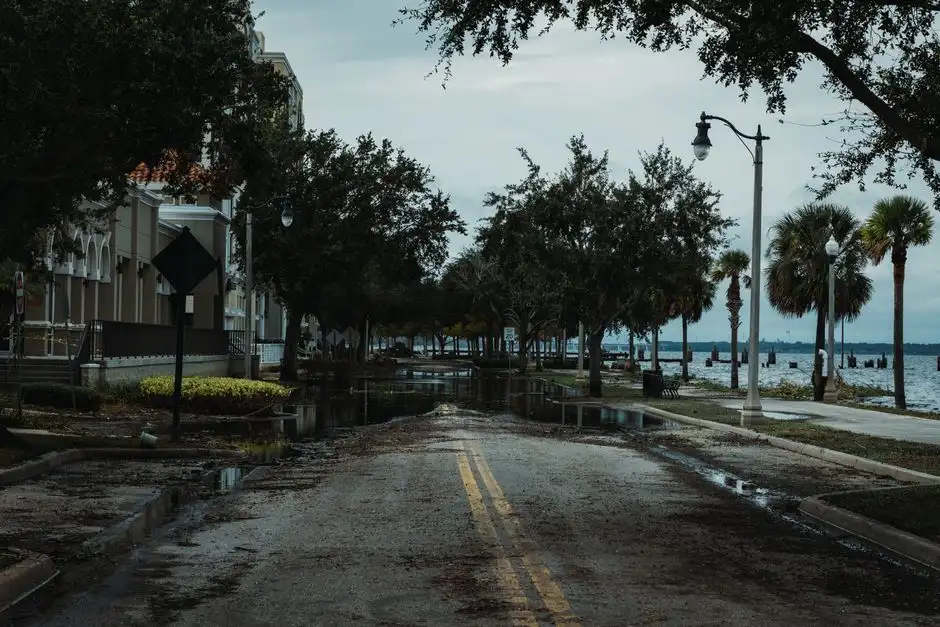
A flooded urban street with palm trees, buildings, and puddles, under a cloudy sky.
Our track record
Our track record

Field evidence from Mission Hills Center jobs

What the work looks like here

Since 2022 we have completed more than 1,200 water damage jobs in Mission Hills Center, and the pattern is consistent. Roughly 60 percent start as burst pipes or slab leaks in buildings older than 1960. Another 25 percent are toilet overflows and sewage backups in Midtown and Center City rentals. The rest split between roof leaks, appliance failures, and post-fire water damage. We average a 60 to 90 minute on-site response across the service area. On a typical week we run four to six emergency water damage cleanup Mission Hills Center calls, plus scheduled mold work. Most residential jobs dry in three to five days; high-rise jobs with multiple affected units take longer because we work floor by floor.

1,200+
Jobs completed

Local questions

How much does water damage restoration cost in Mission Hills Center?

Most residential jobs in Mission Hills Center run $1,200 to $3,500 in 2026. Commercial and multi-unit work typically lands between $4,000 and $12,000. The final number depends on water category, how far it spread, and access. We give you a written estimate before we start.

Who is the best water damage restoration company in Mission Hills Center CA?

The best company is the one that knows your building type and can get there fast. We have worked Mission Hills Center since 2022, completed over 1,200 jobs, and follow ANSI/IICRC S500 on every drying project. Ask any company for their license, insurance, and a sample documentation report.

Is there 24/7 water damage restoration near Mission Hills Center California?

Yes. We answer the phone 24 hours a day, every day of the year, including holidays. Emergency calls in Mission Hills Center get priority, and we aim to be on-site within 60 to 90 minutes for most addresses. Call the same number any time and we will send the closest truck.

Licensed and insured

Licensed and compliant in Mission Hills Center

We hold a California CSLB license and carry liability insurance for every job in Mission Hills Center. Our technicians are trained to ANSI/IICRC S500 for water damage and ANSI/IICRC S520 for mold work. We follow EPA Lead-Safe practices when we open walls in older buildings around Central Park and City Hall, and we meet OSHA 10 and OSHA 30 safety standards on commercial sites. When a job crosses into structural repair, we pull the right permits for Santa Barbara County and the City of Mission Hills. You can ask for our license and insurance before we start.

California CSLB license
California Mold Remediation Worker certification
IICRC WRT (Water Restoration Technician) IICRC
When To Call

Signs you need Water Damage Restoration in Mission Hills Center

Water damage in Mission Hills Center rarely announces itself with a flood. More often it starts as a stain, a smell, or a spike in your water bill. Because so many buildings here share walls and risers, small leaks can spread into neighboring units before you notice. If you see any of these signs, call us. Waiting a day or two is how a simple extraction turns into mold remediation after water damage Mission Hills Center CA work.

1. Brown or yellow ceiling stains

A ceiling stain usually means water is coming from the unit above or a roof leak. In Mission Hills Center high-rises, that is often a riser or a failed supply line. The longer it sits, the more the ceiling cavity soaks, so call as soon as you see it.

2. Musty smell in a basement or crawl space

A musty odor means moisture is trapped and mold is likely starting. Older homes around Central Park and City Hall are especially prone because their crawl spaces were never sealed. We check with moisture meters and thermal imaging before we treat anything.

3. Warped or cupping hardwood floors

Cupping boards mean water is under the floor, not just on it. This is common after kitchen sink leaks and slab leaks in Center City and Midtown. Extraction and drying need to start fast to save the floor.

4. Unexplained spike in your water bill

A sudden jump usually points to a hidden leak, often a slab leak or a running toilet. In Mission Hills Center's older buildings, these leaks can run for weeks before they surface. We locate them with acoustic and thermal tools before opening anything up.

5. Bubbling paint or soft drywall

Bubbling paint and soft drywall mean water is trapped behind the surface. This shows up often after roof leaks near Mission Hills Center Mall and in high-rise walls near the Convention Center. If you press and it gives, call us.

Local Problem Patterns

Common Water Damage Restoration problems in Mission Hills Center

Mission Hills Center has a specific set of water problems that come from its age, density, and climate. The urban core has shared plumbing and flat roofs. The older residential blocks have cast-iron drains and undersized supply lines. Add winter storms and summer humidity, and you get recurring leaks, backups, and mold. These are the four calls we run most often.

Burst pipes in aging high-rise risers

Why it happens here

Many Downtown Core and Civic District buildings still run original galvanized or cast-iron lines. Decades of pressure and corrosion cause failures that send water through multiple floors at once. It is the single most common cause of multi-unit water damage here.

Our approach

We map the riser before we start, isolate the affected floors, and dry each unit separately. Thermal imaging cameras confirm where the water traveled, and we document everything for the building and its insurer.

Basement flooding after winter storms

Why it happens here

Older homes around Central Park and Center City have basements that were never designed for heavy runoff. When the winter rains hit, groundwater finds the cracks and sump failures follow. Standing water can sit for days before anyone notices.

Our approach

We pump and extract fast, then check the walls and floor with moisture meters. We remove wet insulation and baseboards, set drying equipment, and treat with antimicrobial solutions to stop mold before it starts.

Sewage backups in shared municipal lines

Why it happens here

The Downtown Core and Midtown have dense housing on old municipal sewer lines. When those lines surcharge, sewage backs up into ground-floor units and basements. It is a contaminated-water problem, not a simple cleanup.

Our approach

We treat every sewage backup as contaminated. Crews suit up, remove affected materials, disinfect with antimicrobial solutions, and dispose of waste properly. We also flag the line issue so the building can address the root cause.

Attic and ceiling mold after roof leaks

Why it happens here

Flat roofs and aging roof membranes around Mission Hills Center Mall and the Convention Center leak during winter storms. Water soaks insulation and sheathing, and mold can start within 48 to 72 hours in a closed attic.

Our approach

We find the leak with inspection cameras and infrared thermometers, then set containment and negative air machines. Affected insulation comes out, surfaces get treated, and we dry the space before any repairs go back in.

Local Pricing

Water Damage Restoration pricing in Mission Hills Center

Typical 2026 pricing in Mission Hills Center runs $1,200 to $3,500 for a standard residential job, and $4,000 to $12,000 for commercial or multi-unit work. The range depends on how much water there is, what materials got wet, and how hard the building is to access. High-rise jobs near the Downtown Core cost more because of elevator coordination and floor-by-floor drying. We give you a written estimate before we start, and we bill insurance directly when you want us to. If you are looking for affordable water damage restoration in Mission Hills Center, the fastest way to a real number is a quick call and a few photos.

Availability in Mission Hills Center: We answer the phone 24/7, including holidays. Emergency calls in Mission Hills Center get priority, and we aim to be on-site within 60 to 90 minutes for most addresses. Scheduled work like mold remediation and post-drying repairs is usually booked within two to three days. If you need us after hours, call the same number and we will send the closest truck.

1

Water category and contamination

Clean water from a supply line is the cheapest to handle. Sewage backups and storm water are contaminated, so they require PPE, disposal, and antimicrobial treatment. That adds labor and disposal costs to any Mission Hills Center job.

2

Size of the affected area

A single room dries faster and cheaper than a whole floor. In Mission Hills Center high-rises, water often migrates into neighboring units, which means more equipment, more monitoring, and a longer drying schedule.

3

Access and building type

Tight parking and freight elevator coordination add time on Downtown Core and Civic District jobs. Older homes around Central Park can also need extra care when we open walls or floors, especially if there is lead paint or asbestos.

Year-Round Coverage

How seasons affect Water Damage Restoration in Mission Hills Center

Mission Hills Center sees water damage year-round, but the causes shift with the seasons. Winter storms drive basement flooding and roof leaks. Summer humidity feeds mold in crawl spaces and attics. Spring and fall are transition months where we handle a mix of both. Knowing what to expect each season helps you act before a small issue becomes a big one.

Spring

Spring rain and snowmelt push water into basements and crawl spaces around Central Park and Center City. We see a spike in sump failures and foundation seepage. Mold calls also rise as temperatures warm and trapped moisture starts to grow.

Tip

Check your sump pump and clear gutters before the next storm. If your basement smells musty, call for a moisture check before mold sets in.

Summer

Summer humidity in Mission Hills Center keeps crawl spaces and attics damp. Air conditioning condensate lines and older plumbing also fail more often under heat stress. Mold remediation after water damage is our most common summer job.

Tip

Watch for musty odors and condensation on pipes. Run a dehumidifier in basements and crawl spaces, and fix any slow drips before they spread.

Fall

Fall is transition season. We still get mold calls from summer moisture, but the first storms start causing roof leaks and gutter overflows. Flat roofs near Mission Hills Center Mall and the Convention Center are especially vulnerable.

Tip

Clear leaves from roof drains and gutters before the rainy season. If you see ceiling stains after the first storm, call us before the next one hits.

Winter

Winter is our busiest season. Storms drive basement flooding, roof leaks, and burst pipes in older buildings. High-rise risers in the Downtown Core fail more often in cold snaps, and water can travel between units quickly.

Tip

Know where your main shutoff is and keep the number for emergency water removal handy. If a pipe bursts, shut the water off first, then call us.

Hiring Smart

What to ask before hiring a Water Damage Restoration company

Not every water damage company in Mission Hills Center works the same way. Some subcontract the drying, some skip documentation, and some leave before the building is actually dry. These five questions will tell you quickly whether you are dealing with a crew that knows this area or one that is guessing.

  1. 1

    "Are you licensed and insured in California?"

    Why it matters

    A California CSLB license and active liability insurance protect you if something goes wrong on the job. Unlicensed crews can leave you holding the bill for damage or injuries. Ask for the license and a certificate of insurance before work starts.

  2. 2

    "Do you follow ANSI/IICRC S500 for drying?"

    Why it matters

    S500 is the industry standard for water damage restoration. It sets how water is classified, how equipment is placed, and how dry-down is documented. A crew that follows it will give you moisture readings and a clear drying plan, not just a promise.

  3. 3

    "How do you handle high-rise or multi-unit buildings?"

    Why it matters

    Mission Hills Center has a lot of shared plumbing and high-rises. You want a crew that knows how to isolate floors, coordinate with building management, and work around freight elevators. Otherwise the job drags and water keeps spreading.

  4. 4

    "Will you document everything for my insurance claim?"

    Why it matters

    Insurance adjusters want photos, moisture readings, and a clear scope of work. A company that documents properly makes your claim smoother and reduces the chance of a dispute. Ask to see a sample report before you commit.

  5. 5

    "What is your response time for emergency calls?"

    Why it matters

    In water damage, the first hour matters most. A crew that can be on-site in 60 to 90 minutes will save more of your building than one that arrives the next day. Ask for a realistic window, not a sales promise.

Knowing the Area

Navigating Mission Hills Center landmarks

We use Mission Hills Center landmarks as orientation points when we route trucks. Mission Hills Center Mall, Civic Center Plaza, and Central Park split the service area into clear zones, so we know which side of the city a call is coming from before we roll. The Convention Center and City Hall are common reference points for commercial jobs. If you tell us you are two blocks from Civic Center Plaza, we know exactly where to stage.

Landmarks

  • Mission Hills Center Mall

    A major commercial anchor with flat roofs and heavy foot traffic. Roof leaks and ceiling water damage here are common, and after-hours access needs coordination with building management.

  • Civic Center Plaza

    A central orientation point for the Civic District. Many of our commercial and government-building jobs start within a few blocks, and it helps us route quickly through downtown traffic.

  • Central Park

    Surrounded by some of the oldest housing stock in Mission Hills Center. We get steady basement flood and crawl space moisture calls from the blocks around the park.

Commercial Districts

  • Downtown Core business district

    High-rise offices and mixed-use towers with shared plumbing. A single riser failure can affect several floors, so these jobs need careful isolation and floor-by-floor drying.

  • Convention Center district

    Large commercial spaces with heavy water demand and flat roofs. We see roof leaks, supply line failures, and post-event cleanup calls here throughout the year.

Transport & Access

  • Downtown Core transit corridor

    Main bus and rail access through the Downtown Core. Useful for crews moving between jobs, but street parking is tight, so we stage on side streets.

  • Mission Hills Center Mall parking structures

    Provides covered staging and easy hose runs for commercial jobs nearby. We coordinate with management when we need to hold a spot during an active extraction.

Service Area

Water Damage Restoration Coverage Across Mission Hills Center & Santa Barbara County

Routine and same-week appointments for residents and businesses across Santa Barbara County, including the ZIP codes below.

93436
!

Get Water Damage Restoration in Mission Hills Center now

Water does not wait, and neither should you. We answer the phone 24/7 and send the closest truck to your Mission Hills Center address, usually within 60 to 90 minutes. Whether it is a burst riser in the Downtown Core or a flooded basement near Central Park, we stop the water, dry the building, and document everything for your insurance. Call now and we will get you a real arrival window.

Call now
Call Now: (833) 321-7153